 ALKNETWORK
 How to Set Up Automated PostgreSQL Backups on Linux
Production database, no backups scheduled. One bad migration or a dropped table by accident, and there's nothing to restore from.PostgreSQL already ships with pg_dump, so...
Read more →Combines hardware devices and management software to create
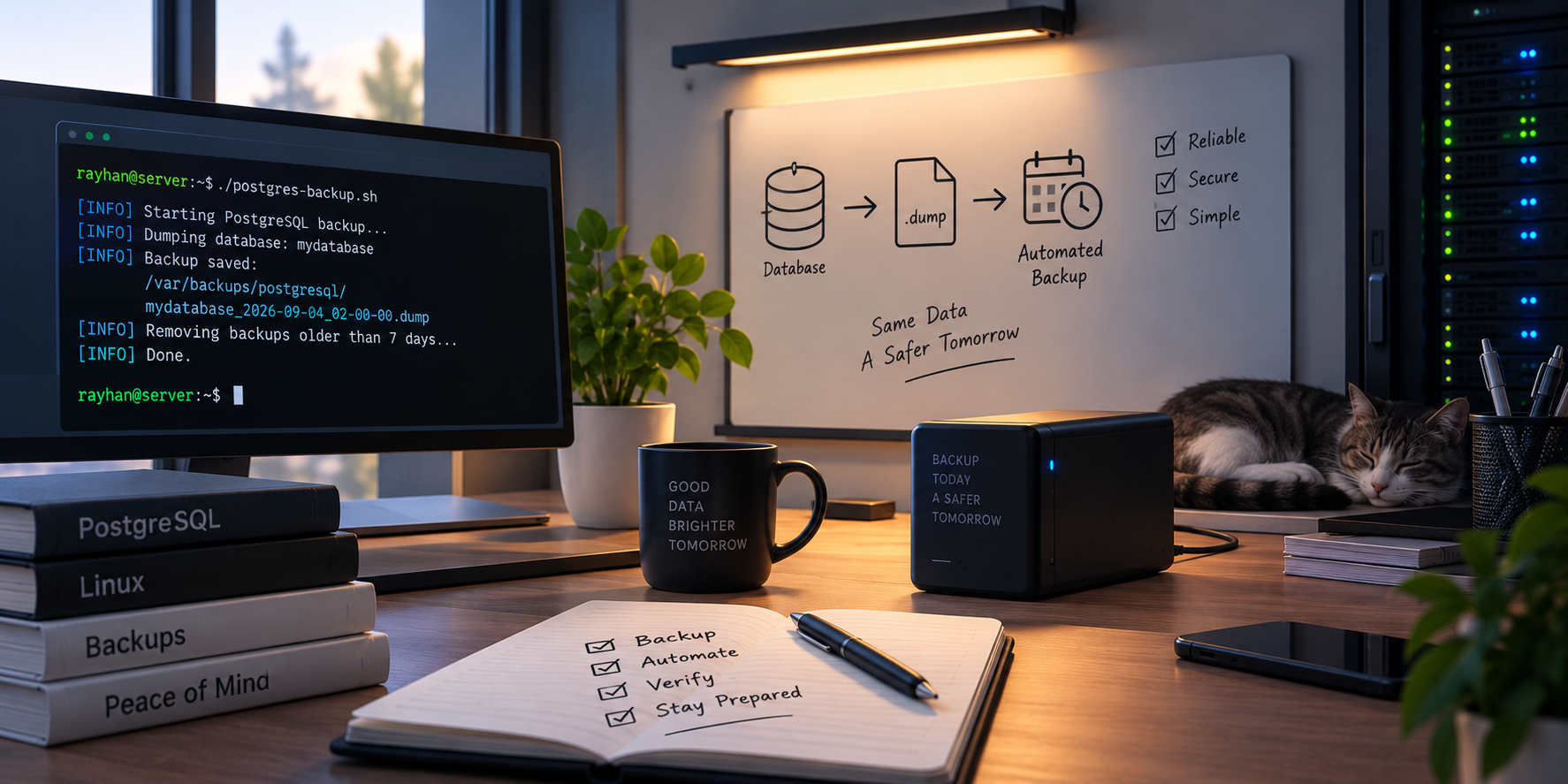
Production database, no backups scheduled. One bad migration or a dropped table by accident, and there's nothing to restore from.PostgreSQL already ships with pg_dump, so...
Read more →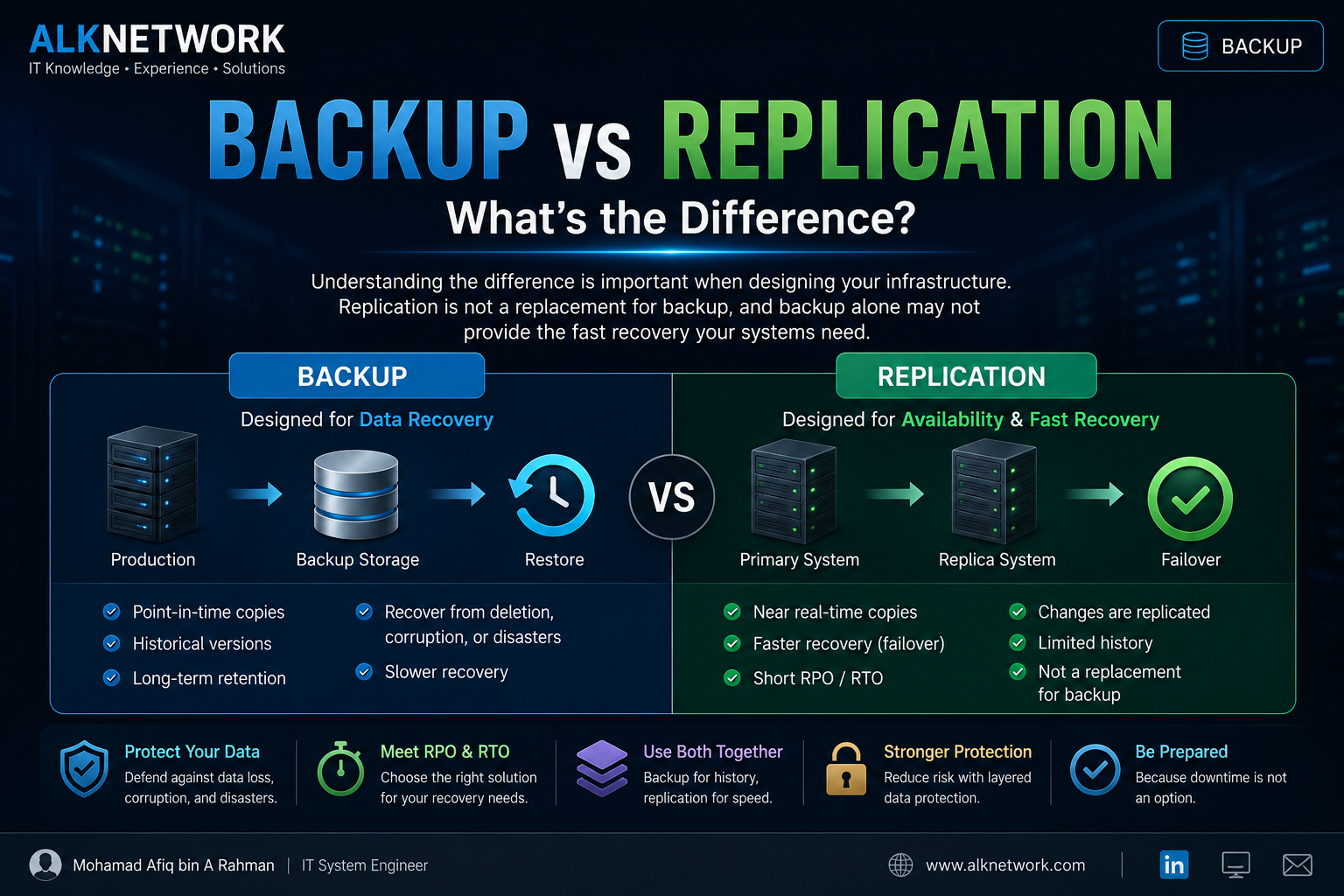
Backup and replication are often mentioned together when discussing data protection and disaster recovery. Although both are designed to help protect systems and data, they solve very different problems. Understanding the difference is important when designing an infrastructure because replication is not a replacement for backup, and backup alone may not provide the fast recovery required for critical systems.
Read more →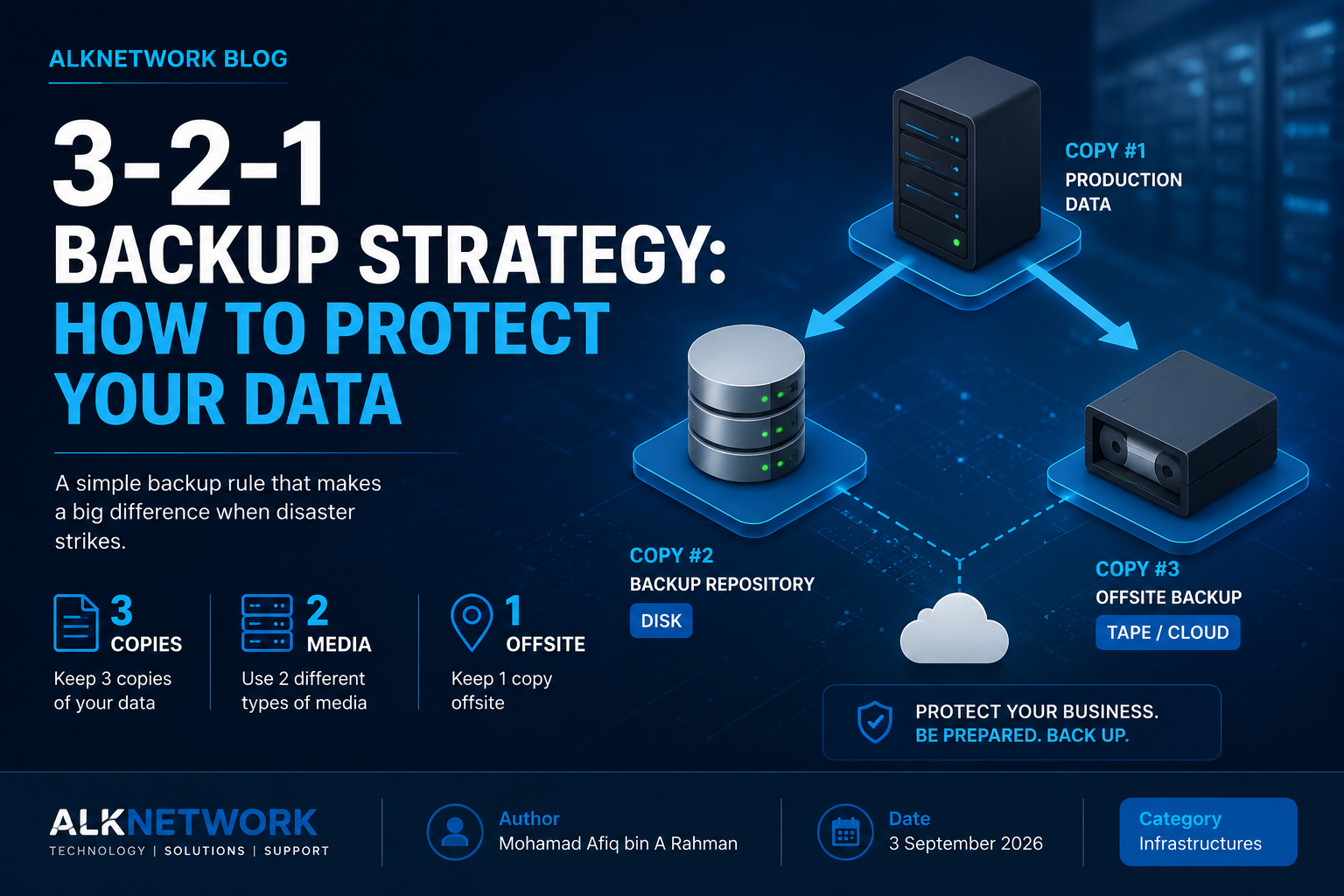
The 3-2-1 Backup Rule is one of the most common principles used to design a reliable backup strategy. The concept is simple: keep multiple copies of your data, use different storage media, and keep at least one copy offsite.
Read more →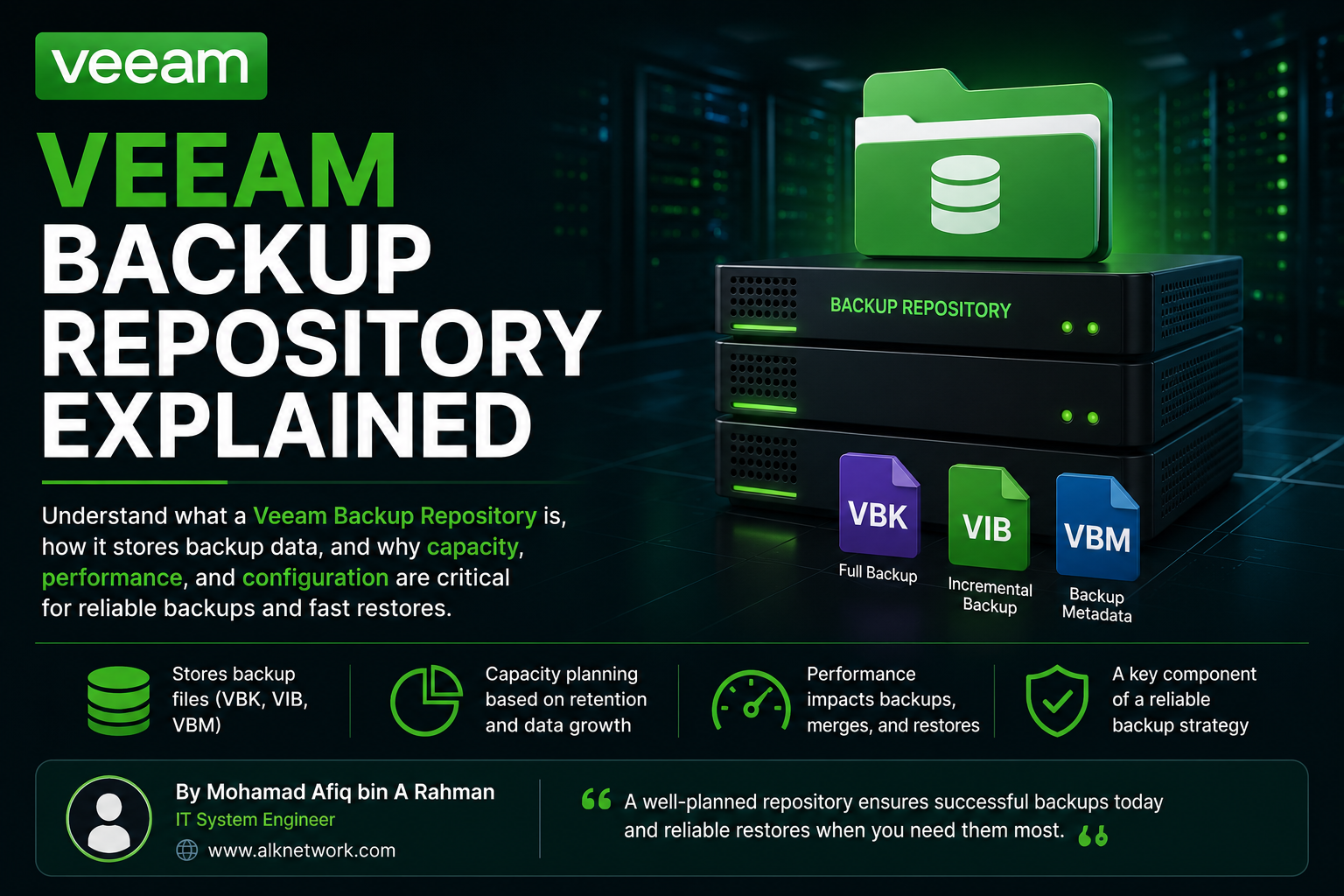
A Veeam Backup Repository is the storage location where Veeam stores backup data. Understanding how a repository works is important because its storage capacity, performance, and configuration can directly affect backup jobs and recovery operations.
Read more →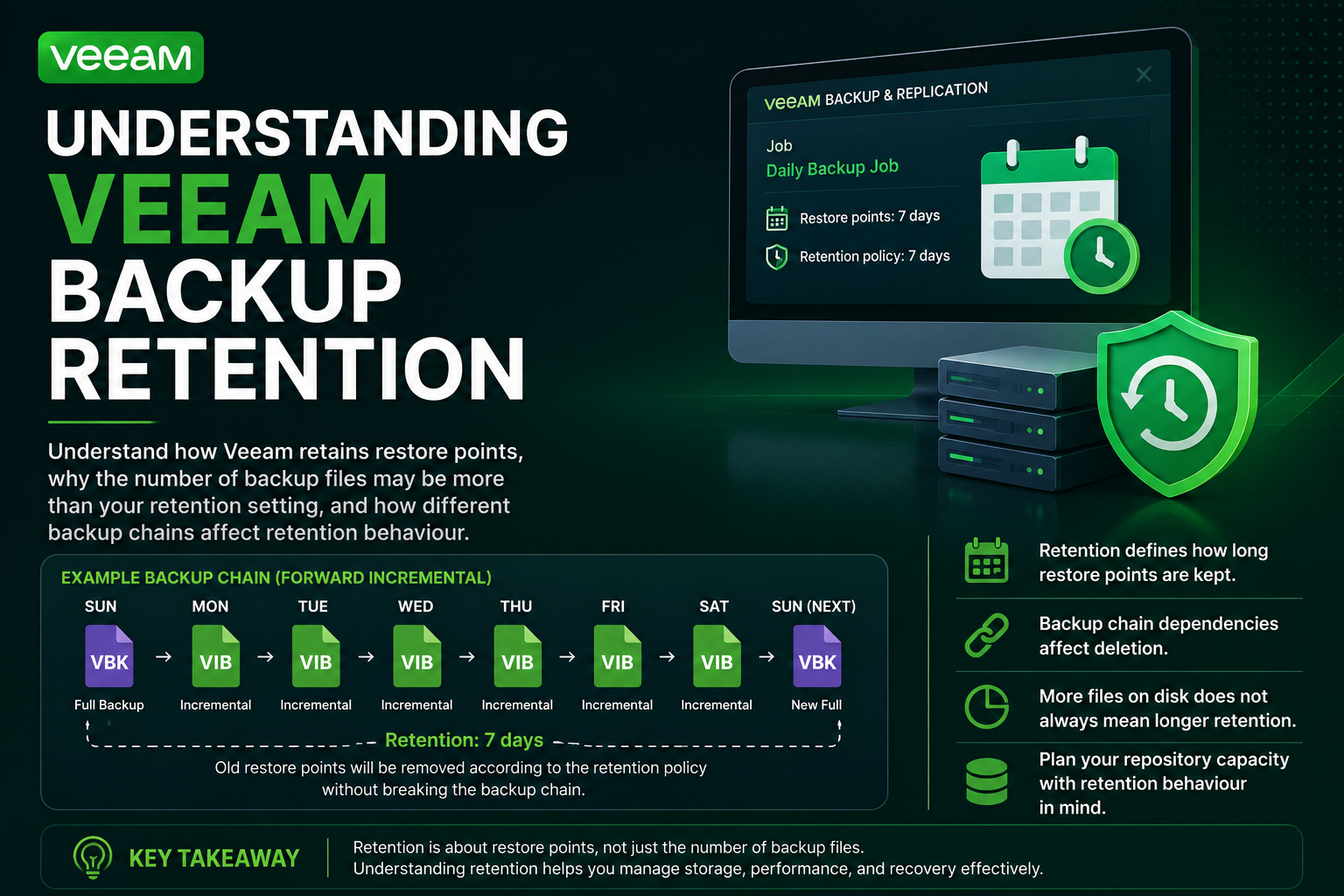
Backup retention determines how long Veeam keeps restore points in the backup repository. Understanding retention is important because the number configured in the job does not always mean Veeam will immediately delete older backup files once that number is reached.
Read more →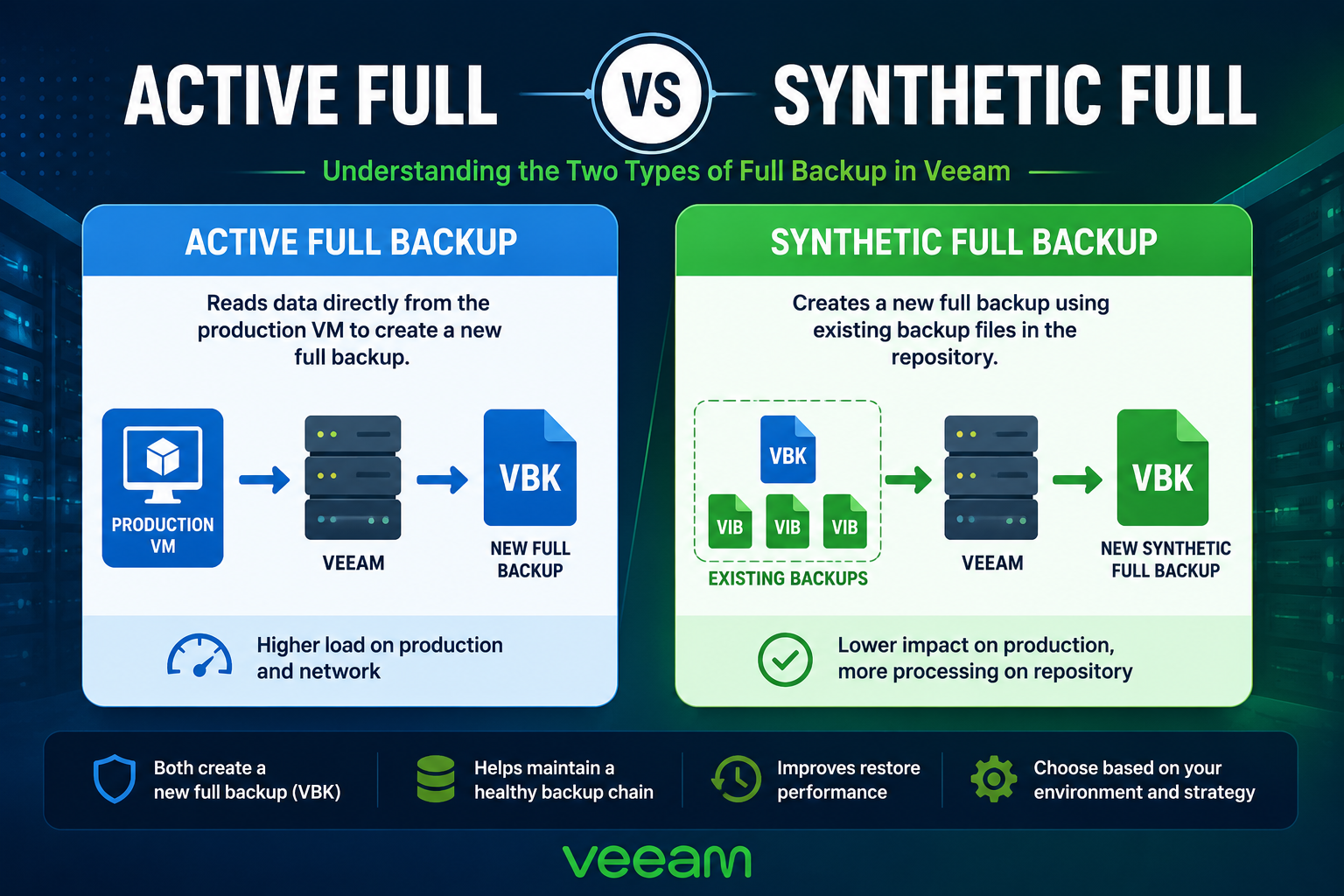
In Veeam, a full backup can be created in different ways. The two common methods are Active Full and Synthetic Full, and the main difference is where Veeam gets the data to create the new full backup.
Read more →