 ALKNETWORK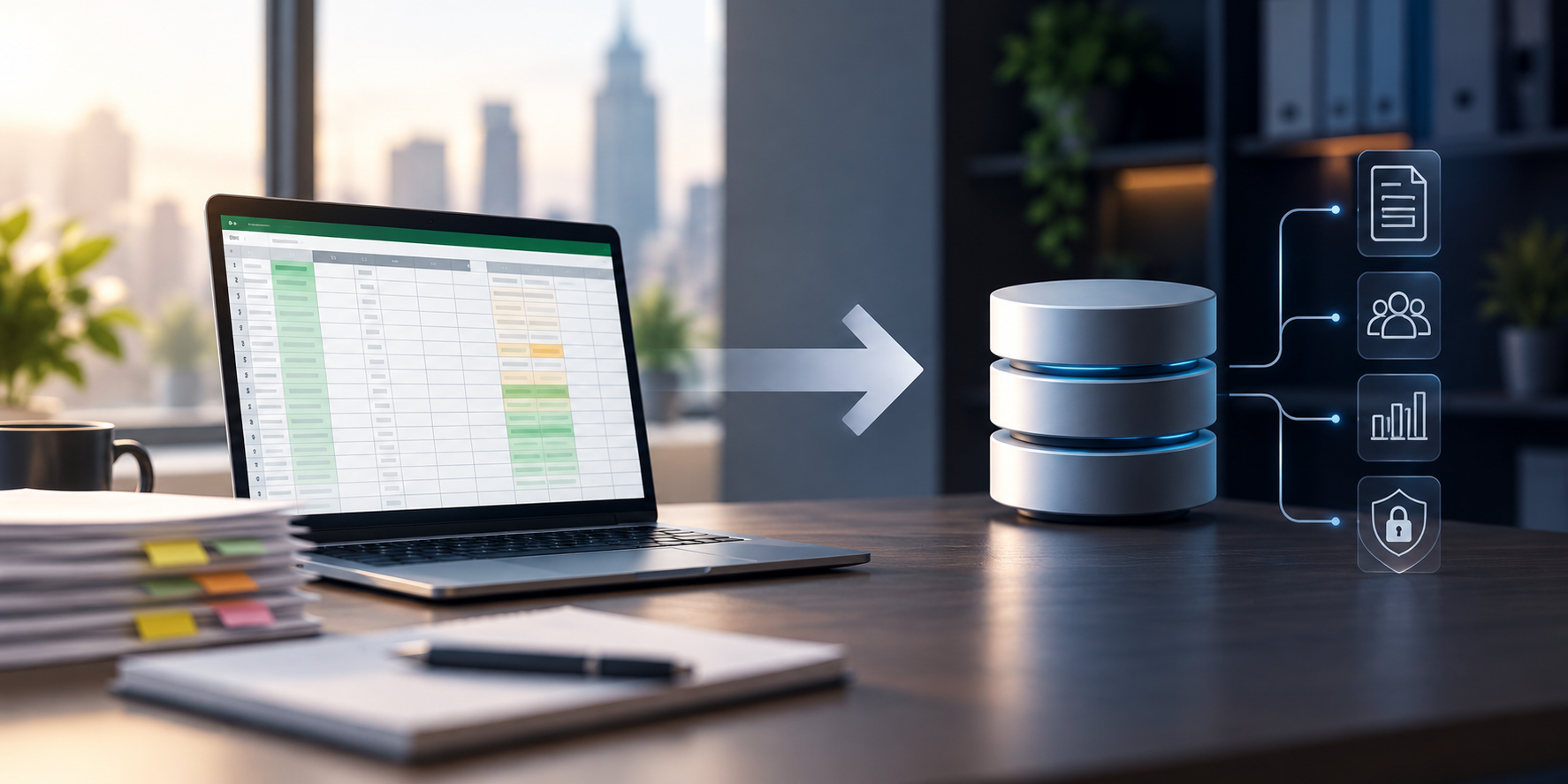
Management asks why this month's sales number doesn't match what operations has on file. You check, and there are three spreadsheets with three different totals, so nobody knows which one's right.
That's usually the moment someone asks: do we need a database?
It's not about file size. Excel handles tens of thousands of rows fine. It's about how many people touch the same data.
Watch out for:
- Different departments keeping their own copy of the same data
- Manual copy-pasting between files every week just to build a report
- Different people needing different permissions (edit vs. view vs. approve)
- No one able to answer "who changed this number, and why?"
- One file that, if lost, would actually stop the business
If two or more of these sound familiar, it's worth a real conversation.
A "database" doesn't mean staff have to learn SQL. It just sits behind a normal web app with forms, tables and logins, same as any site they already use. Excel still stays around for exports and analysis, so it just stops being the only place the data lives.
And if it's one person updating a small list twice a month with no approvals needed, leave it in Excel. Not every spreadsheet needs to become software.
Migrate the one process causing the most pain first, then leave the rest alone.